DC-DC Charging Off the Alternator in Commercial Vehicles
The Short Answer: A DC-DC converter charges a second battery from the vehicle’s alternator while the engine runs. It takes the varying input voltage coming off the alternator and starting battery, then regulates it to a stable output voltage matched to the exact charge profile the auxiliary battery needs. This lets a work truck, van, or fleet vehicle keep tools, refrigeration, and equipment powered without idling, wiring the batteries directly together, or risking the starting battery.
Commercial vehicles often carry a second battery for equipment that has nothing to do with starting the engine. It helps power accessories like liftgates, refrigeration, inverters, telematics, and onboard tools. The question is how to charge that auxiliary battery reliably while the vehicle is working.
Wiring it straight to the alternator seems simple, but it underperforms and can damage modern batteries. A DC-DC converter solves this by managing the charge properly and understanding how it meets the specific requirements of the build and holds up in the field.
Where the Alternator Alone Falls Short
An alternator is built to do one job well: replace the charge the starting battery loses when the engine cranks, then hold the vehicle’s electrical system at a steady voltage. It was never designed to fully charge a deeply discharged second battery or to serve as a controlled power supply for a separate energy storage system.
Connecting an auxiliary battery directly to the alternator, or tying it to the starting battery through a simple relay, runs into a few problems. The alternator’s output voltage often sits too low to fully charge a deep cycle or lithium battery, so the battery voltage never climbs enough for a complete charge. Voltage drop across long cable runs to a bed-mounted or trailer battery makes this worse. Also, modern lithium (LiFePO4) batteries expect a specific charge profile that a raw alternator feed does not provide, which would shorten their life or trip their internal protection.
There is also a risk in the other direction. A discharged auxiliary battery wired directly to the system can pull stored energy from the starting battery, leaving the vehicle unable to start.
How a DC-DC Converter Solves It
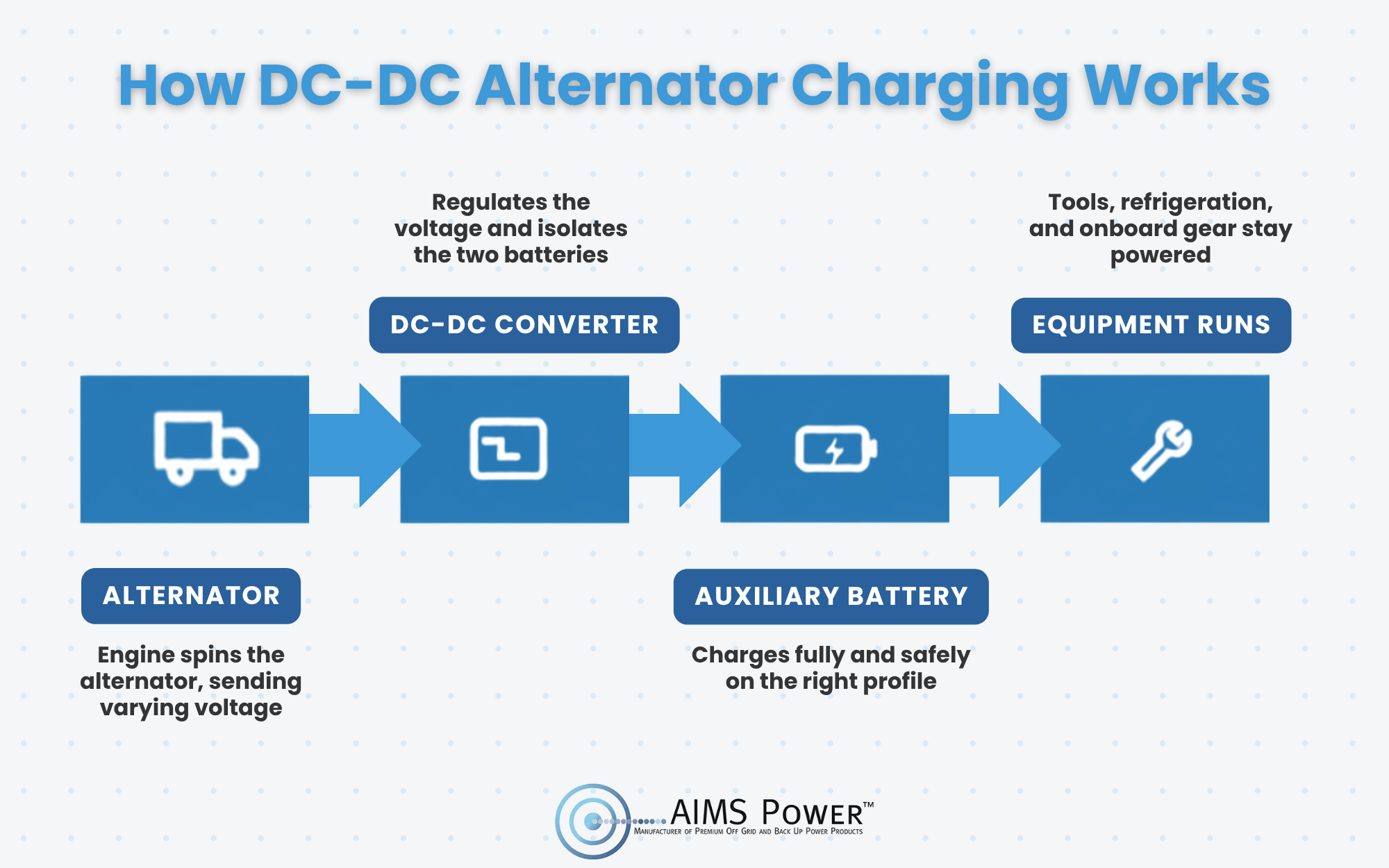
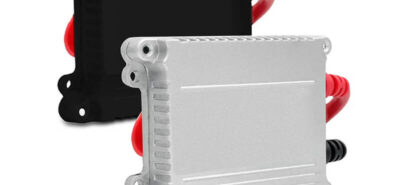
A DC-DC converter sits between the starting battery and the auxiliary battery and controls the energy transfer between them. Instead of passing the alternator’s raw output straight through, this power converter takes the input voltage from the vehicle side and produces a regulated output voltage matched to what the auxiliary battery needs for a full, safe charge. Unlike a linear regulator, which sheds extra voltage as heat, a switching converter moves energy with high efficiency and wastes very little of the alternator’s output.
Most vehicle units are step-down, or buck converter, designs that bring a higher voltage down to a low voltage, such as a 24V system feeding a 12V battery. A step-up, or boost, converter does the reverse. Matching the direction to your battery voltage is the first spec decision.
Voltage Regulation and Charge Profile
The core function is voltage regulation. The converter accepts a range of input voltages from the alternator and starting battery, which fluctuate with engine speed and load, and delivers a stable DC voltage to the auxiliary battery.
Many DC-DC chargers step through a multi-stage charge profile (bulk, absorption, float) so the battery reaches full charge the way its chemistry requires. A direct alternator connection cannot do this on its own.
Lithium batteries need particular attention when the charging source is an alternator. Alternator output is not built around a lithium charge profile, and a long drive cycle can hold the battery above its safe voltage. A battery voltage regulator sits inline and disconnects the battery from the 12V source when voltage moves outside the safe window, which lets a lithium bank charge from an alternator without overcharging. AIMS offers it in 100 amp and 200 amp sizes.
Battery Isolation
The converter also protects the starting battery by isolating it from the auxiliary side. Because energy only moves in one direction, from the starting side to the auxiliary side, it isolates the two batteries. The auxiliary loads can draw the second battery all the way down without ever touching the starting battery, so the vehicle always starts. This isolation is one of the main reasons fleets move to a DC-DC setup.
Handling Alternator Conditions
Vehicle electrical systems are harsh environments for electronics. A converter built for this use can tolerate the voltage swings and wide temperature range of an engine bay. Quality units also include protection against a load dump, the voltage spike that occurs when the alternator is running, and a battery connection that is suddenly lost.
Matching the Converter to the System
Specifying the right DC-DC converter for alternator charging comes down to a handful of decisions. The right unit is what separates a system that charges fully on every route from one that underdelivers.
Spec | What to consider |
Input voltage | Match the vehicle system: 12V or 24V. Some converters accept a wide input range for mixed fleets. |
Output voltage | Set to the auxiliary battery’s chemistry (lead-acid, AGM, or lithium) and its charge profile. |
Output current | Higher output current charges the battery faster, but the alternator has to supply it. |
Power rating | The converter’s output power has to fit both the battery bank size and the alternator’s headroom. |
Mounting | Chassis mount handles vibration and heat in an engine bay or truck body. |
Isolation | Galvanic isolation adds a layer of separation for sensitive electronics and mixed-voltage systems. |
Output and Current Charge Time
Output current sets how fast the auxiliary battery recharges. A higher output current means a shorter charge time, which matters for a delivery vehicle making short trips with the engine cycling on and off.
The limit is the alternator: the converter draws its charging current from the vehicle, so the alternator needs enough spare capacity above the vehicle’s own energy consumption to supply it. Higher power converters push more current across a range of power levels, but they demand more from the alternator.
Lead Acid, AGM, or Lithium
The auxiliary battery chemistry drives the output voltage setting. Lead acid and AGM batteries charge in one voltage range, while lithium needs a different range along with a specific charge profile. A converter that supports the target chemistry, ideally with a selectable output for lithium, keeps the battery healthy over its full service life.
Where This Shows Up in the Field
DC-DC alternator charging is standard practice across a range of commercial builds and various applications:
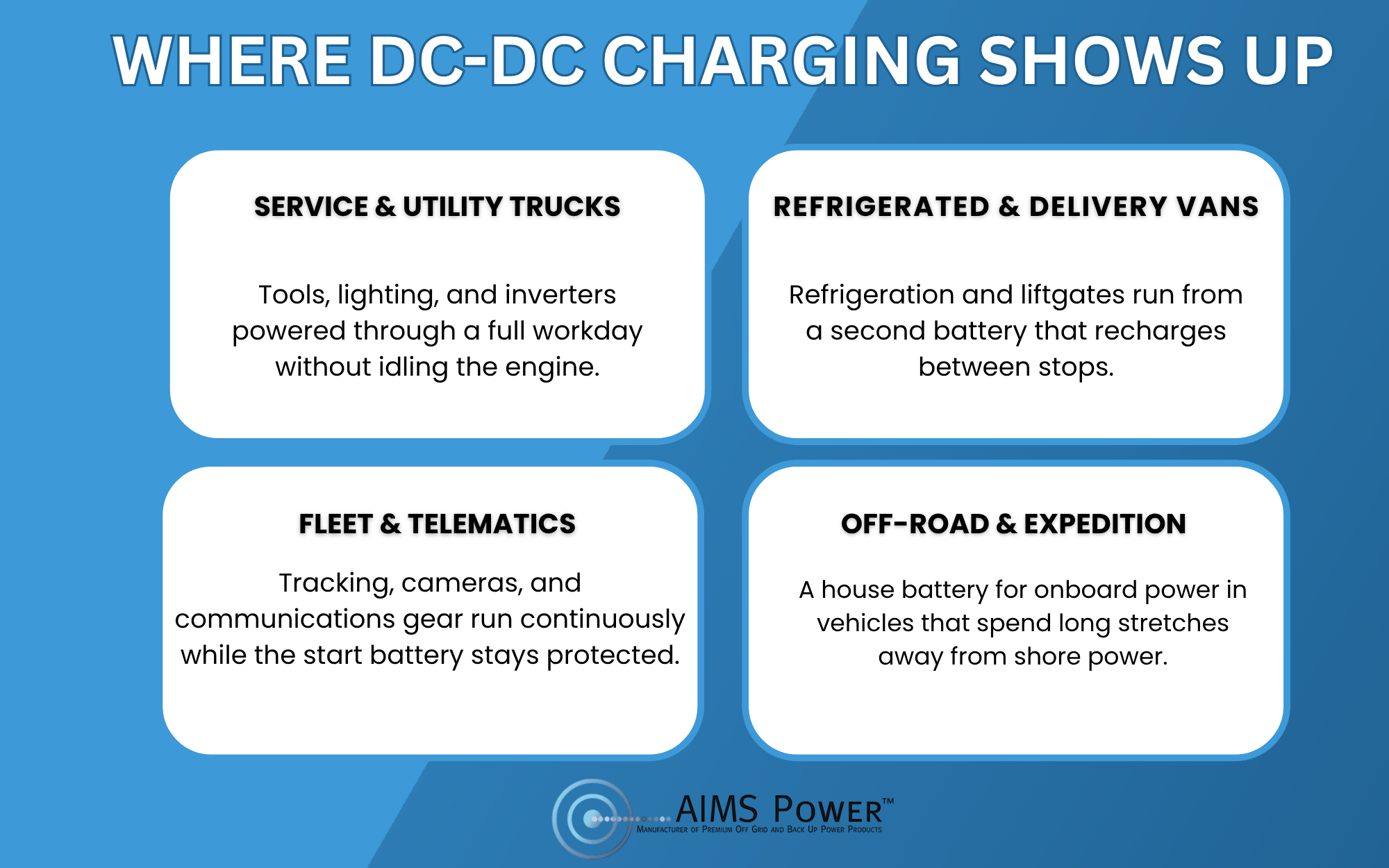
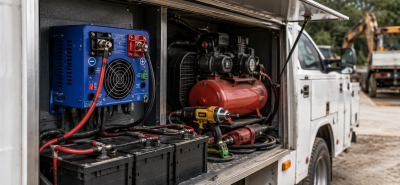
- Service and utility trucks: Keeping tools, lighting, and inverters powered from an auxiliary battery through a full workday without idling the engine.
- Refrigerated vans and delivery vehicles: Running refrigeration or liftgates from a second battery that recharges on the move between stops.
- Fleet and telematics: Powering tracking, cameras, and communications gear continuously while protecting the starting battery.
- Electric vehicle and industrial applications: EV and industrial platforms use DC-DC converters to move power from a high-voltage pack down to lower-voltage systems across a storage system, the same principle at higher power.
- Off-road and expedition vehicles: Charging a house battery for onboard power in vehicles that spend long stretches away from shore power.
In each case, the DC-DC converter turns the alternator into a reliable charging source for a battery it cannot charge on its own.
Build the Charging System With AIMS Power
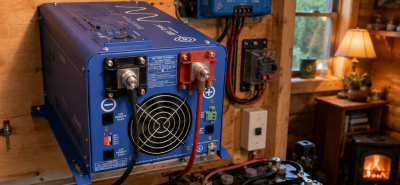
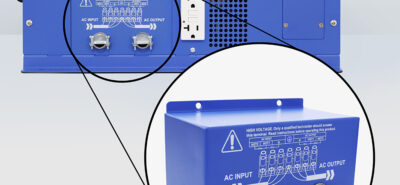
AIMS Power is a U.S.-based manufacturer with more than 30 years of building power conversion equipment, backed by in-house technical support. AIMS builds DC-DC step-down converters that handle voltage regulation for auxiliary and accessory circuits, along with the pure sine wave inverters and deep cycle batteries that complete a mobile power system.
For fleets, upfitters, and OEMs building this into a vehicle line, this means one complete solution, and the application helps to size the converter to the alternator, the battery voltage, and the load.
If you are speccing DC-DC charging for a commercial vehicle or a fleet program, contact AIMS Power to match the converter to your system or to talk through OEM and volume options.