Inverter Efficiency Curves and No-Load Draw in Always-On Systems
The Short Answer: A power inverter does not operate at a single flat efficiency rate. As the load changes, the conversion efficiency changes along a specific curve. In an always-on system, the inverter draws a small amount of power even when no loads are connected, known as no-load draw or standby consumption. Accounting for both the efficiency curve and the standby load prevents unexpected battery drain and ensures reliable power across all varying power levels.
Designing an off-grid electrical setup, a commercial fleet vehicle, or a continuous backup power source requires more than just matching watt ratings. Understanding how a power inverter manages energy consumption under different conditions dictates how well the entire system performs in the real world.
A system that ignores the inverter’s efficiency curve and idle power consumption will underperform, leaving batteries depleted when you need them most. This guide explains how to read efficiency data, manage no-load draw, and select the right equipment to maximize total output power.
What is Power Inverter Efficiency?
Power inverter efficiency measures how effectively a unit converts DC power from a battery bank or solar system into AC power for your equipment. No power conversion process is perfect. During the transformation, a certain percentage of the input power is lost, primarily as heat.
If an inverter has an efficiency rating of 90 percent, it means that 90 percent of the DC input becomes usable AC output. The remaining 10 percent is lost to the conversion process. When you calculate the total energy consumption of your setup, you must account for the power the load requires plus the power the inverter consumes to do its job.
Most reliable inverter manufacturers design their equipment to minimize these losses. However, the exact efficiency rate fluctuates based on how much output power is being drawn at any given moment.
Reading the Inverter Efficiency Curve
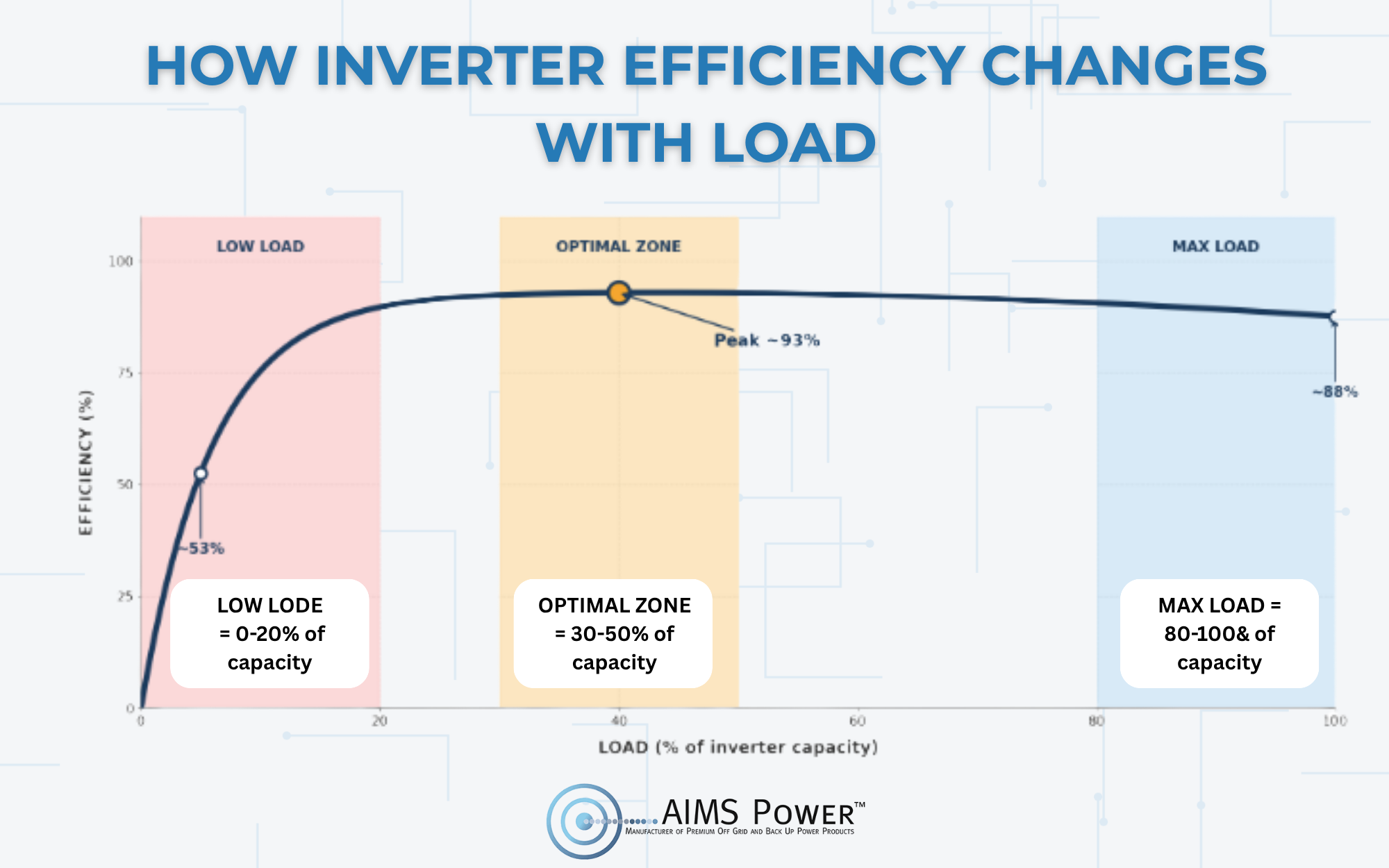
The power inverter efficiency you see on a specification sheet is often a peak rating. This peak number is a predicted value that occurs under optimal conditions, typically when the load is between 30 and 50 percent of the unit’s total capacity. The efficiency does not remain static across all power levels. Instead, it follows an efficiency curve.
Low Load vs. High Load Performance
When you plot conversion efficiency on a graph, it forms a curve that climbs quickly, plateaus at the peak efficiency range, and then slowly tapers off as the inverter approaches its maximum load limit.
- Low Loads: Running a 40-watt laptop computer on a 3000-watt inverter will yield lower efficiency. The base power required to operate the inverter’s internal components represents a large percentage of the total input power.
- Optimal Loads: Operating loads at 30 to 50 percent of the unit’s capacity usually hits the peak of the curve.
- Maximum Loads: Pushing the inverter near its maximum watt rating generates more heat, which slightly lowers the efficiency.
Engineers mapping out energy consumption for large commercial projects often use a statistical model to track this curve. By measuring the power factor and load demand at each specific time throughout the day, they can accurately calculate the total daily power consumption and ensure the battery bank is sized correctly.
The Hidden Drain: Standby Consumption and No-Load Draw
In an always-on setup, the power inverter remains powered up even when no equipment is actively drawing AC power. During this idle time, the unit still consumes energy. This is known as no-load draw, standby load, or standby consumption.
Even without an active load, the internal power electronics require a continuous flow of DC input to remain operational. The inverter must maintain its internal sensors, power its cooling fans, keep the sine wave generator active, and supply voltage to any built-in displays or active USB ports.
This standby consumption adds up over a 24-hour period. If a large inverter has a no-load draw of 2 amps at 12 volts, it consumes 24 watts continuously. Over 24 hours, that standby load pulls 576 watt-hours from the battery bank, completely independent of the actual equipment you plug in.
Managing No-Load Draw
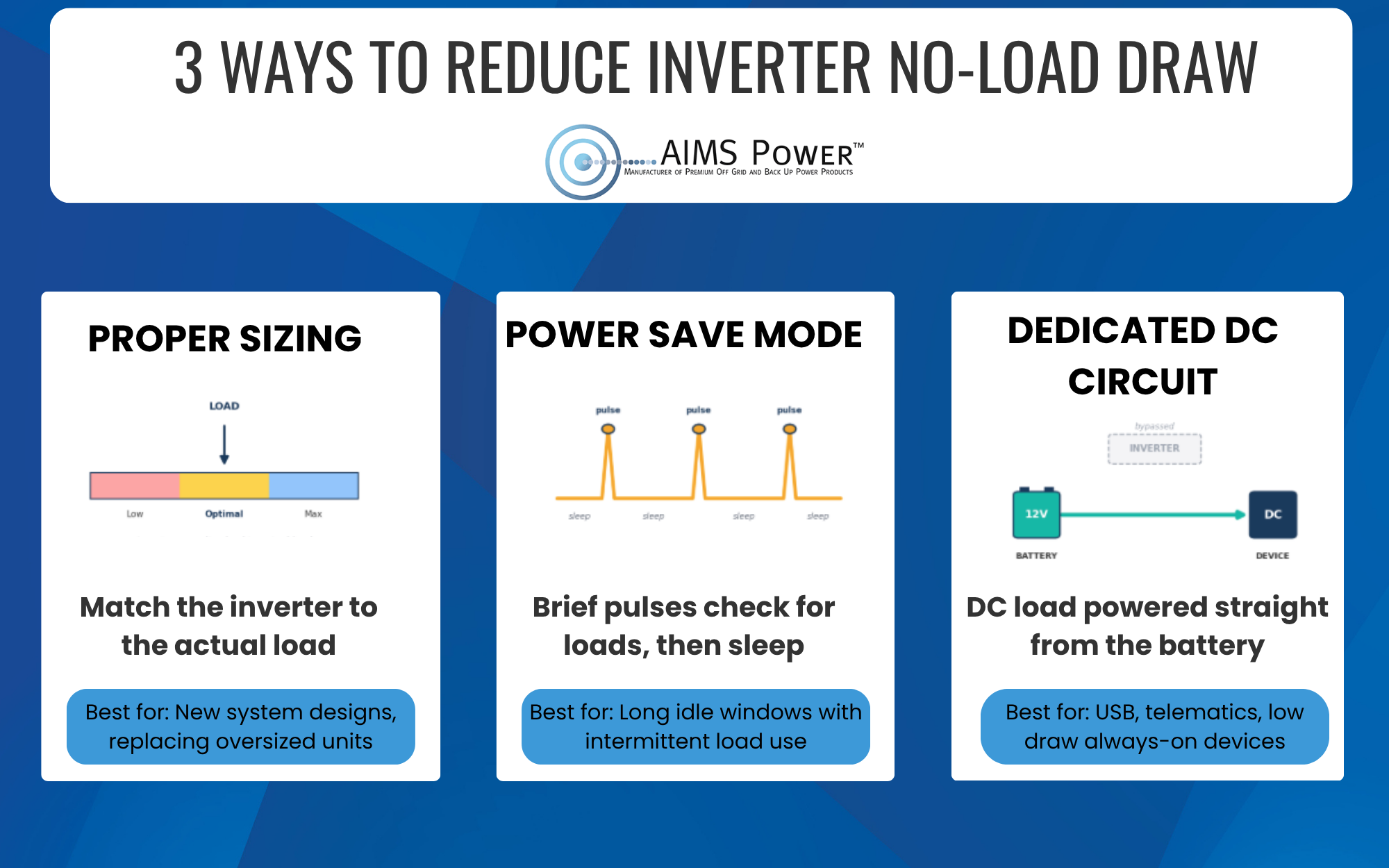
To prevent excessive battery drain, system designers implement several strategies:
- Proper Inverter Sizing: Avoid installing a massive inverter for very small, continuous loads. Sizing the unit close to the actual power demand keeps the no-load draw proportional to the battery bank.
- Power Save Modes: Many modern power devices feature a sleep or power save mode. The inverter drops its output voltage and pulses the line to detect a load, drastically reducing the stand-by load until a device is turned on (resistive loads only)
- Dedicated DC Circuits: For small electronic device charging, running a dedicated DC circuit directly from the battery bypasses the inverter entirely.
Advanced Components and Conversion Efficiency
The internal architecture of the inverter dictates both its efficiency curve and its resting power consumption. Modern high-frequency inverters operate differently than older designs.
Comparing a modern PSW inverter (pure sine wave inverter) to older technology highlights these advancements. A traditional transformer-rectifier design relies on heavy copper coils and iron cores. While physically heavy and capable of handling massive surges, these units often have higher no-load draws.
Modern power module design utilizes advanced solid-state semiconductors and high-speed switching components. By minimizing internal electrical resistance and heat loss, these power electronics convert energy cleanly and stay cooler under load. This directly translates to higher conversion efficiency, stable power delivery, and significantly reduced standby consumption across extended runtimes.
System Design and Solar Integration
The inverter’s efficiency directly impacts how you size your solar power array and battery storage. If you rely on solar energy to recharge your system, your solar panels must generate enough power to replace both the energy used by your tools and the energy lost during power conversion.
Factoring in Solar Production
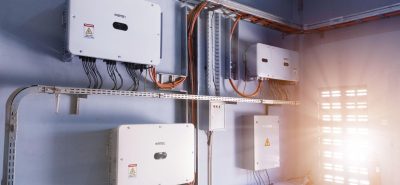
A dedicated solar inverter managing high-voltage PV input operates under similar efficiency rules. Whether you use a combined inverter charger or separate components, the total solar production must exceed total energy consumption.
System Component | Sizing Consideration |
Battery Bank | Must hold enough capacity for the load plus the inverter’s conversion losses and continuous standby consumption. |
Solar Panel Array | Must produce enough daily wattage to clear the inverter’s no-load draw before actively charging the battery bank. |
Inverter Sizing | Should be sized so that standard daily loads fall into the 30 to 50 percent capacity range to maximize the inverter’s efficiency curve. |
When designing a solar system for mobile fleets or stationary grid service applications, every watt matters. A highly efficient inverter reduces the number of solar panels required to maintain the battery bank, saving space and weight on commercial vehicles.
You can explore various configurations and equipment requirements by reviewing professional-grade power inverters to match your exact load profile.
Selecting the Right Equipment for Always-On Applications
Matching the Inverter Size to the Load
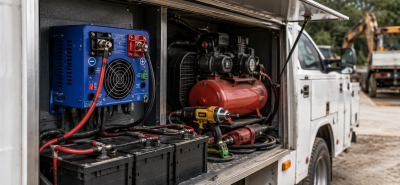
Matching the equipment to the application ensures you do not waste battery capacity. A telematics system on a commercial truck drawing 20 watts continuously does not need a 4000-watt inverter running 24/7.
Instead, operators often split their power source needs. They might use a small, highly efficient inverter for continuous low-draw networking equipment while reserving a larger unit exclusively for heavy tools that only run a few hours a day.
Integrated Power Management
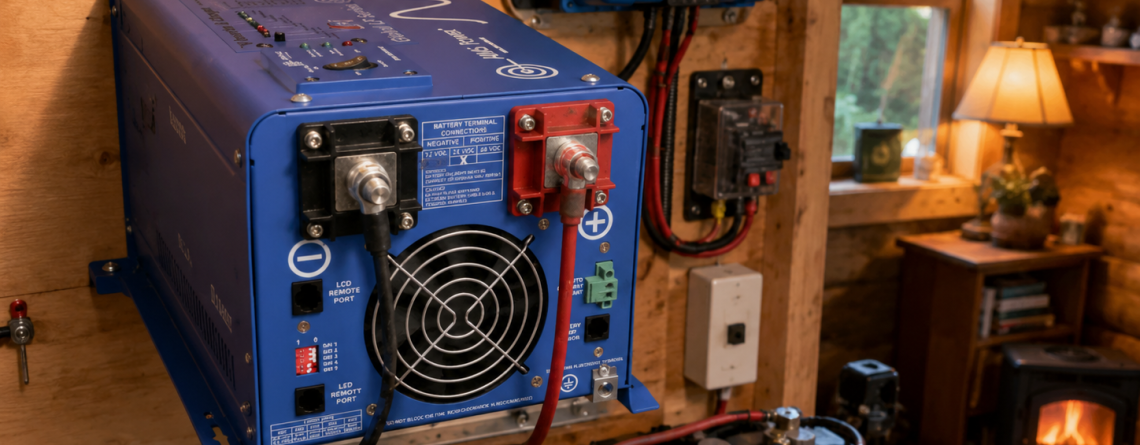
If your application requires integrating shore power, alternator charging, and battery inversion into one system, selecting equipment that manages these transitions efficiently is critical. Units designed with a low standby load and a highly optimized sine wave output keep your sensitive equipment safe without unnecessarily draining your reserves.
For complete power management, integrating reliable inverter chargers simplifies the wiring while providing precise control over battery charging profiles and idle power consumption.
Build Your Power System With AIMS Power
AIMS Power is a U.S.-based manufacturer with more than 30 years of experience building power conversion equipment and renewable energy solutions. We provide technical expertise and reliable power products for OEMs, commercial fleets, RV manufacturers, and solar installers. Our equipment is designed to deliver clean AC power with highly optimized efficiency curves and manageable standby consumption rates.
Whether you need a low-frequency inverter for heavy motor loads, a lightweight high-frequency unit for mobile applications, or high-capacity batteries and solar panels to complete an off-grid build, AIMS Power delivers the technical foundation your project requires.
Contact our technical support team to spec out a custom power system, or browse the complete line of AIMS Power solutions to find the right equipment for your next commercial application.