Designing a Commercial Off-Grid Solar Power System
The Short Answer: A commercial off-grid solar power system runs entirely on its own, with no connection to the utility grid. It typically combines a solar array, a charge controller, a battery bank, and an inverter, each sized to the site’s load and daily sun hours. Get the sizing and component match right, and the system delivers reliable power around the clock. Get it wrong, and it either falls short under load or costs far more than the application needs.
Designing an off-grid system for a business is a different job than wiring up a weekend cabin. The loads are larger, the uptime requirements are stricter, and the cost of a system that underperforms is felt fast. This guide walks through the core components, how to size them to real energy needs, how to choose a battery chemistry, and the design decisions that separate a commercial build that holds up from one that doesn’t.
The Core Components of an Off-Grid Solar Power System
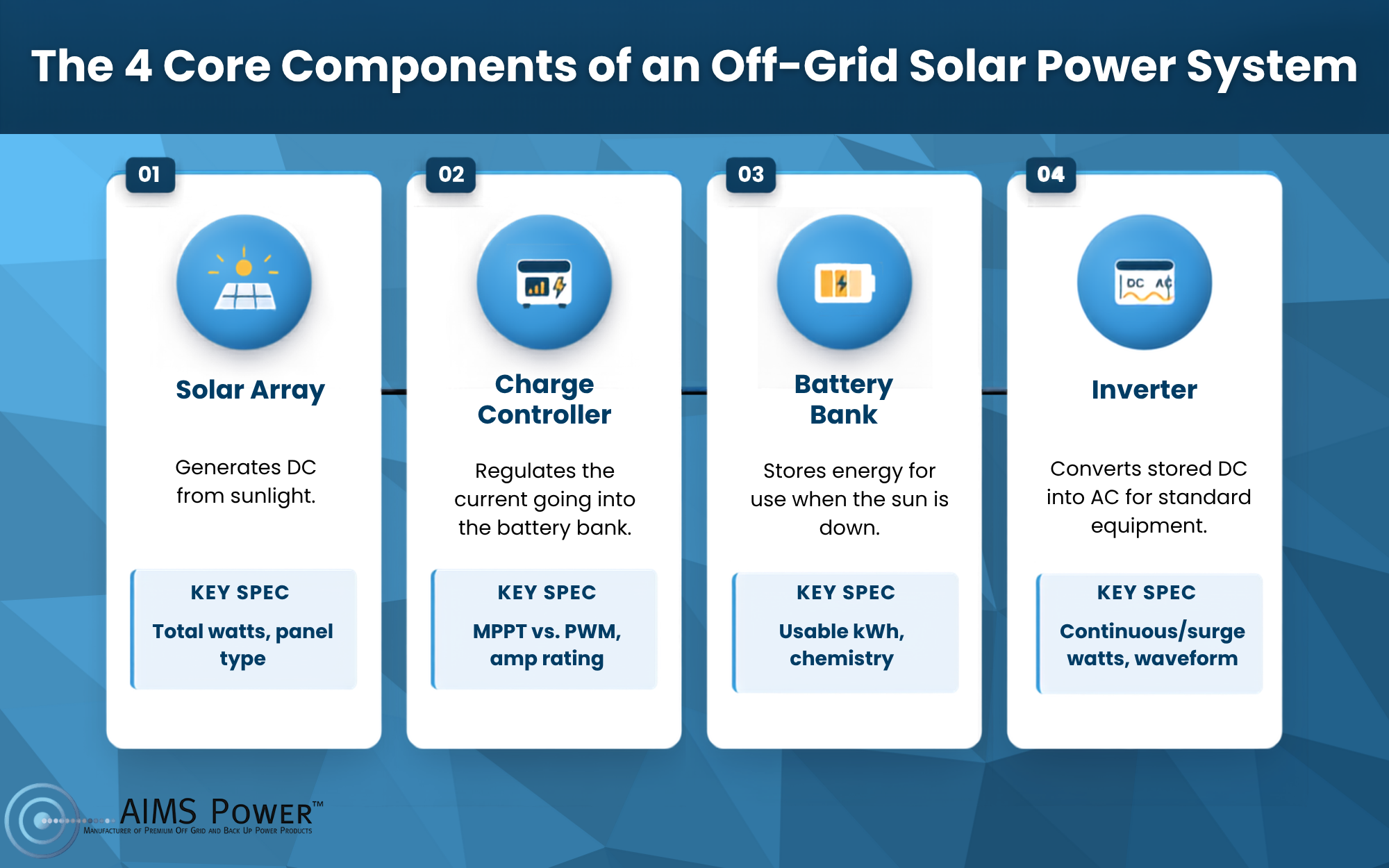
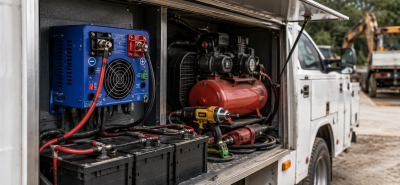
Every off-grid solar power system runs on the same four parts. Understanding what each one does is the starting point for any design:
|
Component |
Job |
Key spec to check |
|
Solar array |
Generates DC from sunlight |
Total watts, panel type |
|
Charge controller |
Regulates charging |
MPPT vs. PWM, amp rating |
|
Battery bank |
Stores energy |
Usable kWh, chemistry |
|
Inverter |
Converts DC to AC |
Continuous/surge watts, waveform |
Solar Array
The solar array is the group of solar panels that captures solar energy and turns it into direct current. Array size, measured in watts, sets how much energy the system can generate on a given day. For commercial builds, each solar panel’s quality and the mounting hardware matter as much as raw wattage, since the array has to hold up in the field for decades.
Charge Controller
A charge controller sits between the solar array and the battery bank. It regulates the voltage and current coming off the panels so the batteries charge safely and reach maximum power without overcharging. An MPPT solar charge controller pulls more usable energy from the array than an older PWM design, which is why it’s the standard for larger systems.
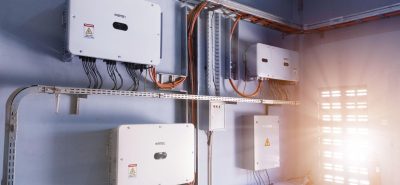
Inverter
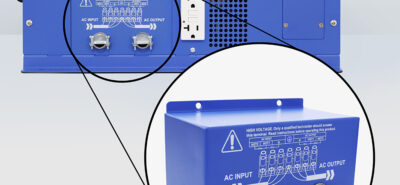
The inverter converts the direct current stored in the batteries into the alternating current that standard equipment and household appliances run on. For any commercial load with motors, compressors, or electronics, a pure sine wave inverter is a practical requirement.
Sizing the System to the Load
The design starts with the load, not the panels. Oversize the array, and you pay for capacity you never use. Undersize the battery bank and the system dies overnight.
Start With an Energy Audit
List every device the system has to run, its wattage, and how many hours a day it runs. Multiply to get watt-hours per day. That daily total is the number the rest of the design is built around. For commercial sites with mixed loads, separate the constant loads like controls and refrigeration from the intermittent ones like tools and pumps.
Size for Power, Not Just Energy
Your daily watt-hours size the battery bank and array, but they don’t tell you how much the system has to deliver at once. Add up the running wattage of everything that could run simultaneously to find your peak load, then account for startup surge. Motors, compressors, and pumps can pull two to five times their running wattage the moment they switch on, so the inverter’s surge rating has to cover that spike or it will trip. This peak-plus-surge number sets your inverter size, separate from the energy total that sizes storage.
Factor in Sun Hours and Days of Autonomy
Daily energy needs tell you how much the array has to produce. Peak sun hours, a location’s usable solar production per day, tell you how big the array has to be to produce it. Days of autonomy, how long the system runs with no sun, tell you how big the solar battery bank has to be. Remote locations with long overcast stretches need more storage, not just more panels.
A rough sizing path:
- Daily load (watt-hours) ÷ peak sun hours = array size needed
- Daily load × days of autonomy ÷ usable battery depth ÷ system efficiency = battery capacity needed
- Peak simultaneous load = minimum inverter continuous rating
AIMS Power’s solar sizing tool can run these numbers for a specific site, which is worth doing before you commit to a parts list.
Lithium vs. Lead-Acid: Choosing a Battery Chemistry
Battery choice drives cost, lifespan, and maintenance more than any other single decision in the build. Two chemistries dominate off-grid work.
|
Feature |
Lithium (LiFePO4) |
Lead-Acid (AGM) |
|
Usable depth |
~80-100% |
~50% |
|
Cycle life |
3,500+ cycles |
500-1,200 cycles |
|
Weight |
Lighter |
Heavier |
|
Maintenance |
Low maintenance |
Higher |
|
Upfront cost |
Higher |
Lower |
A lithium battery built on lithium iron phosphate (LiFePO4) chemistry delivers more usable capacity per amp-hour with high efficiency, a longer cycle life, and low maintenance operation. Lead acid batteries cost less upfront but have shorter lifespans and give you only about half their rated capacity before you risk damage.
For a commercial system that cycles daily, the longer service life of lithium usually wins on total cost over the life of the system. For budget-driven or backup-only builds that cycle rarely, AGM lead-acid batteries can still be the right call.
Off-Grid, Grid-Tied, or Hybrid: Picking the Right Configuration
Not every site that wants solar should go fully off-grid. The configuration you choose shapes the whole component list.
Fully Off-Grid
An off-grid system has no connection to the utility grid at all. It’s the right call for remote areas where extending grid power is expensive or impossible: telecom sites, agricultural operations, remote monitoring stations, and job sites far from a utility line.
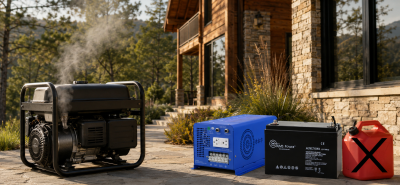
Everything the site uses has to come from the array and battery bank, which puts a premium on accurate sizing. Many commercial off-grid systems also include backup generation or additional energy sources to maintain uptime during extended periods of low solar production.
Grid-Tied and Hybrid
A grid-tied setup runs alongside utility power and can feed excess electricity back to the grid. A hybrid system adds a battery bank on top of that, so the site keeps running as backup power when the grid goes down and can lean on stored solar during peak-rate hours to cut the bill. AIMS Power’s 9.6 kW hybrid inverter and solar panel kit packages that whole approach into one system, combining grid tie, battery backup, net metering, and generator backup.
For businesses chasing energy independence, lower electricity costs, and more resilience, hybrid is often the better fit than going fully off-grid. The decision comes down to whether grid power is available, what it costs, and how critical uptime is.
Design Practices That Hold Up in Commercial Builds
A few decisions separate a system that runs for years from one that generates service calls.
- Size for the worst month, not the average. Winter sun hours in many regions are half the summer figure. A year-round system needs to account for the difference.
- Build in headroom. A system run at 100% of spec every day wears down faster, and the extra room makes future expansion easier.
- Match the inverter to surge loads. Motors and compressors draw several times their running wattage at startup. A power inverter sized only to average running watts will trip.
- Plan for serviceability. Commercial sites need parts that can be sourced and replaced quickly, backed by a supplier with real technical support. AIMS Power backs its equipment with strong manufacturer warranties, including multi-year coverage on inverters and all-in-one units and lifetime coverage on its lithium batteries.
- Protect the electronics. Fusing, disconnects, and correct cable sizing keep the system safe and code-compliant.
Any commercial solar installation should be signed off by an electrical engineer or an experienced installer before it’s built.
Where Commercial Off-Grid Solar Often Gets Used 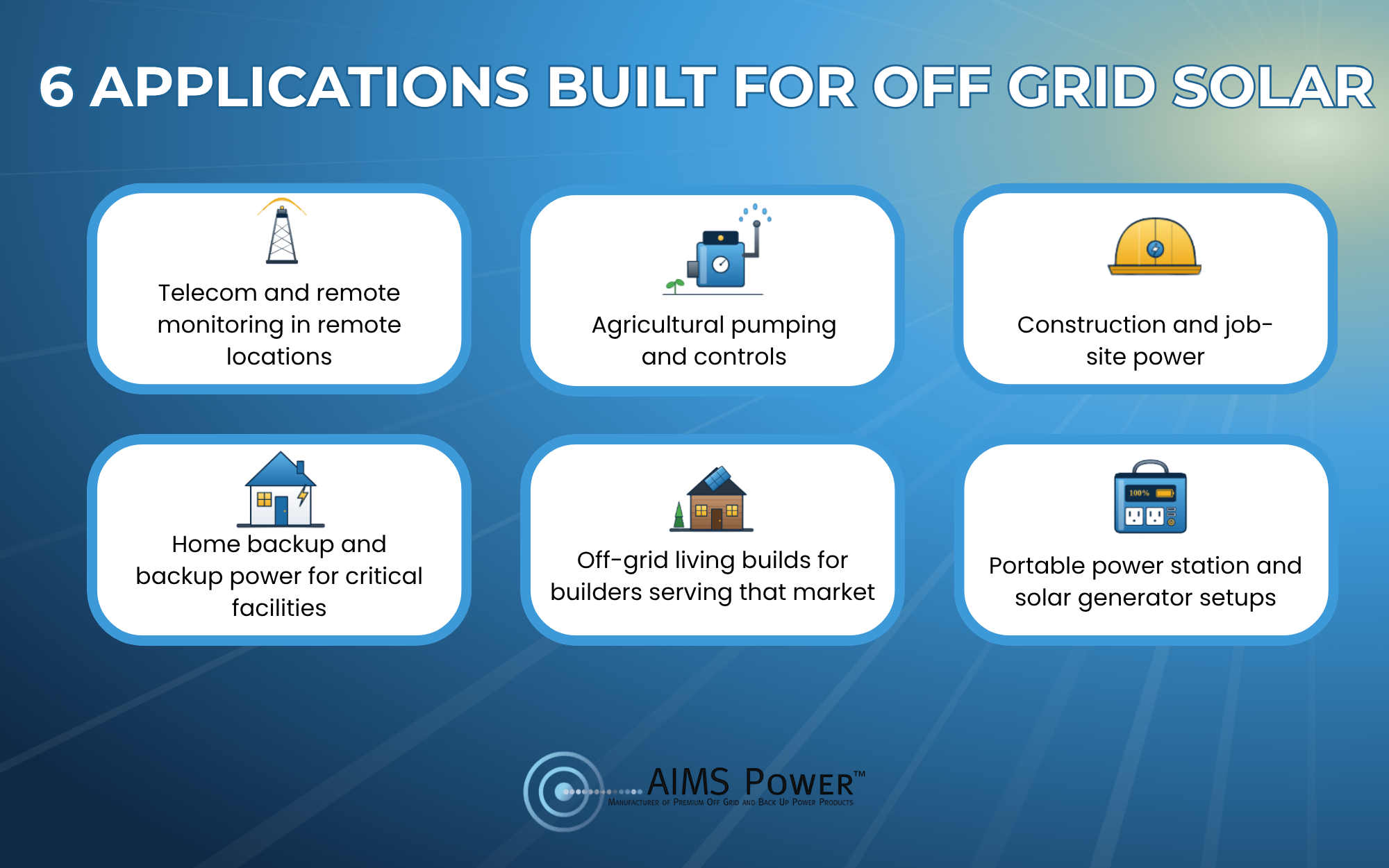
Off-grid solar power shows up anywhere reliable power is needed without a utility connection:
- Telecom and remote monitoring in remote locations
- Agricultural pumping and controls
- Construction and job-site power
- Home backup and backup systems for critical facilities
- Off-grid living builds, cabins, and tiny homes for builders serving that market
- Portable power station and solar generator setups for mobile operations
The same core design applies across all of them. What changes is the size and scale of each part.
Designing Your Off-Grid System With AIMS Power
AIMS Power designs, builds, and tests the core parts of an off-grid solar power system in-house: pure sine wave inverters, MPPT solar charge controllers, LiFePO4 lithium batteries, solar panels, and complete solar kits, backed by more than 25 years of experience and U.S.-based technical support. For installers, dealers, OEMs, and businesses specing power into a site or a product, that means one source for matched components and application helps to size them correctly.
Start with AIMS Power’s solar kits for pre-matched systems, or use the solar sizing tool to spec a build for your site. If you’re sourcing at volume or building an off-grid solar solution into what you sell, contact AIMS Power for spec support or to talk through an OEM or reseller partnership.
Frequently Asked Questions
How many solar panels does a commercial off-grid system need?
It depends entirely on the daily load and local sun hours, not on the site’s square footage. Divide daily watt-hours by peak sun hours to find the array size in watts, then divide by your panel wattage to get the panel count. A sizing tool or an installer can help determine the right number for your site.
What size battery bank do I need for an off-grid solar power system?
Multiply your daily energy use by the number of days you need the system to run without sun, then divide by the usable depth of your battery chemistry. Lithium gives you nearly all of its rated capacity; lead-acid gives you about half, so a lead-acid bank has to be roughly twice the size for the same usable storage.
Can an off-grid solar power system run 24/7 reliably?
Yes, when it’s sized correctly. Reliable round-the-clock power comes from matching the array to the load, adding enough battery storage for cloudy days, and choosing a pure sine wave inverter rated for the site’s surge loads. Undersized systems are the usual cause of failures.
Is lithium or lead-acid better for a commercial off-grid system?
For a system that cycles daily, lithium iron phosphate usually wins on total cost because of its longer cycle life, deeper usable capacity, and low maintenance. Lead-acid still makes sense for backup-only systems that cycle rarely and where upfront cost is the priority.
Do I need an engineer or a permit for a commercial off-grid solar install?
Most commercial installations require a permit and a sign-off from a licensed electrical engineer, and requirements vary by jurisdiction. Check local code early, since it affects component selection, fusing, and grounding.