Inverter vs. Converter: What Each One Actually Does in Your Power System
The Short Answer: An inverter changes the form of power, turning DC electricity from a battery or solar panel into the AC electricity that standard equipment runs on. A converter changes the level or condition of power instead, either stepping DC voltage up or down or turning AC into DC to charge a battery.
On a spec sheet or a purchase order, “inverter” and “converter” are often treated as if they mean the same thing, but they do not. One changes the form of power, flipping direct current into alternating current, while the other changes the level or condition of power while keeping it in the same form. Confuse the two when you’re specifying a build and the cost appears later, as a failed component, a warranty claim, or a system that won’t run the load it was sized for.
Knowing what a converter does, what an inverter does, and where each one lives in a system, across solar, RV, fleet, and industrial builds, is what keeps the two straight on a spec and shows how they work together in integrated units.
What a Converter Actually Does
A converter changes the voltage level or the condition of power without performing the DC-to-AC flip that defines an inverter. Converters fall into two main types: DC-DC and AC-DC.
DC-DC Converters
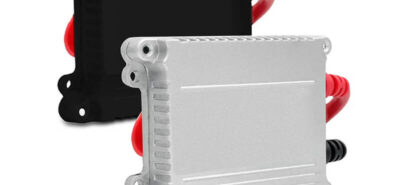
DC-DC converters move power between voltage levels, keeping it as DC the whole way. A step-down converter safely drops the voltage (discharges) to a lower voltage bank, preventing damage. In a 48V battery system that also has to run 12V accessories, a step-down DC converter takes the 48V down to the 12V those accessories expect. That regulated output is what lets one battery bank safely run components rated for different voltages.
AC-DC Converters
AC-DC converters take AC power and produce DC power. A battery charger is the common example: it pulls AC electricity from shore power or the electrical grid and outputs the DC electricity that handles battery charging. In mobile and off-grid builds, this is the unit that keeps the battery bank charged whenever grid or shore power is available.
A converter keeps sensitive electronics fed with stable voltage at the level each circuit needs. It’s what makes mixed-voltage electrical systems work in RVs, fleet vehicles, and industrial settings, where a single power source often has to serve components rated for different voltages.
What an Inverter Actually Does
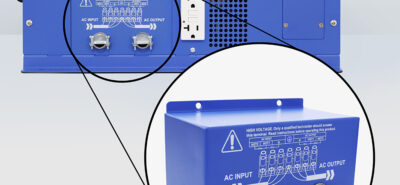
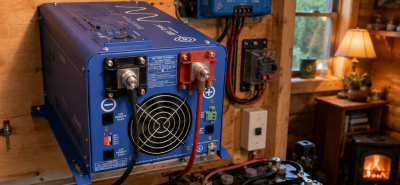
An inverter converts DC electricity into AC electricity. It takes the direct current stored in a battery or produced by a solar panel or fuel cells and turns it into the AC power that household appliances and commercial equipment expect from a wall outlet.
Output Quality: Pure Sine vs. Modified Sine
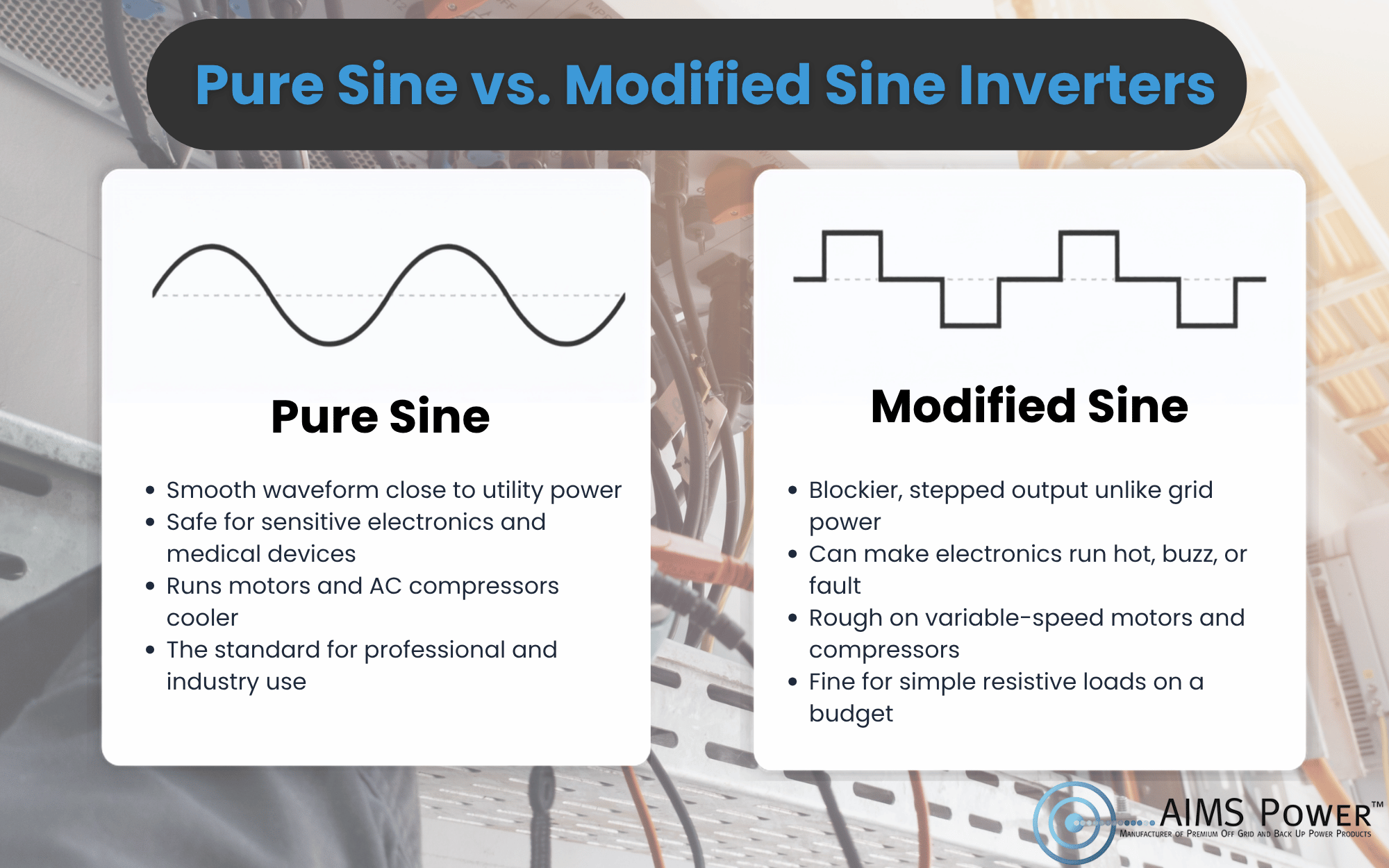
Output quality is the biggest difference between inverter types. A pure sine wave inverter produces a smooth waveform close to grid power, with total harmonic distortion typically under 3%. A modified or square wave inverter produces a stepped, blockier waveform. That difference matters for sensitive electronics, variable-speed motors, and air conditioner compressors, which can run hot, buzz, or fault on a square wave. Pure sine wave is the practical standard for professional and industrial applications for that reason.
Inverter Types by Application
Different inverter types map to different jobs. A hybrid inverter manages solar, battery, and grid inputs in one unit, which is what most renewable energy systems need. A power inverter sits between a DC power source and AC loads in mobile and off-grid builds. In each case, the output waveform, along with the continuous and surge ratings, determines whether the inverter actually runs the intended load, so those are the specs to check first.
Inverter vs. Converter: The Core Difference Side by Side
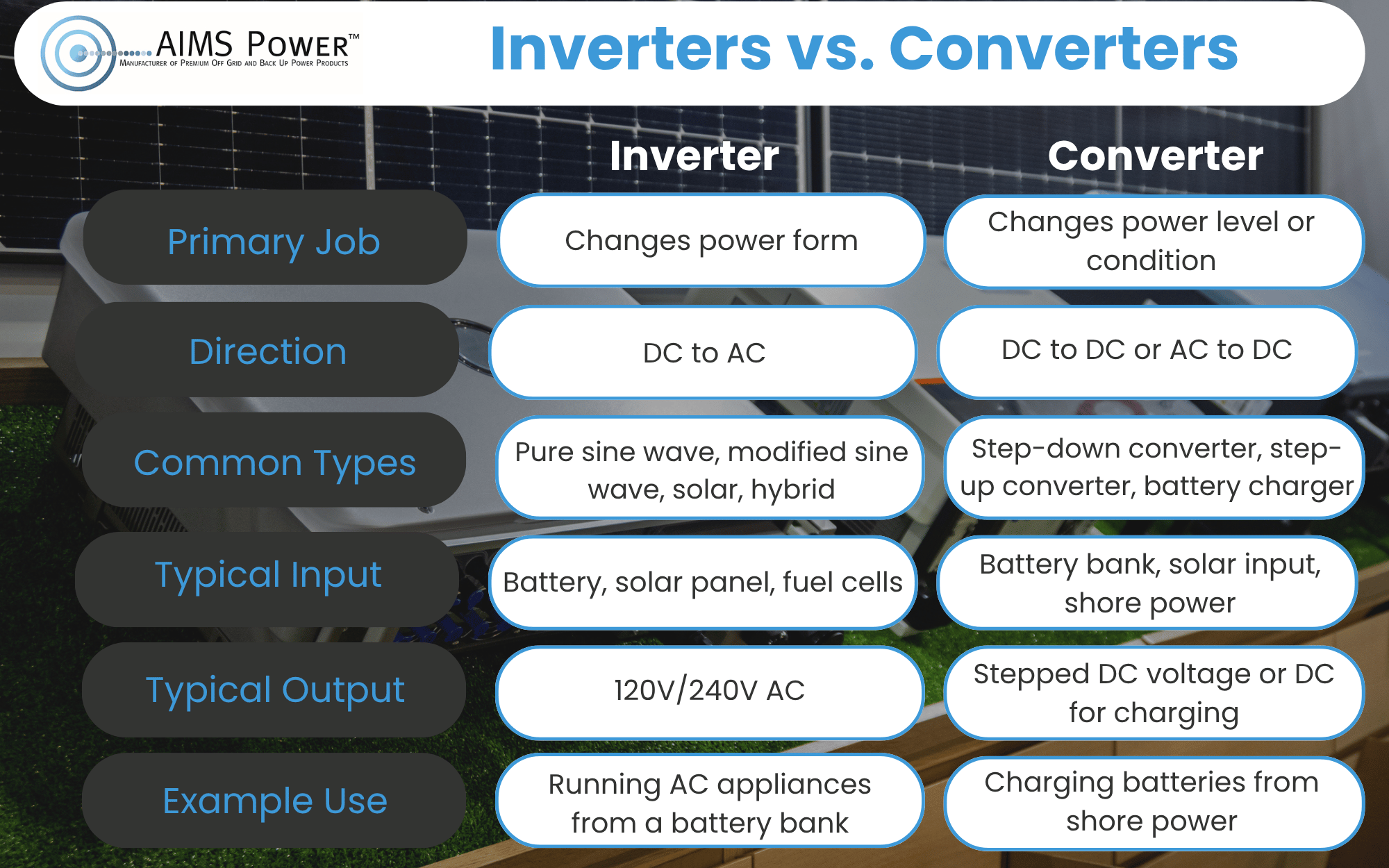
The cleanest way to separate the two is by the problem each solves. An inverter changes the form of power from DC to AC. A converter changes the level or condition of power, either stepping DC voltage up or down, or turning AC into DC.
Inverter | Converter | |
Primary job | Changes power form | Changes power level or condition |
Direction | DC to AC | DC to DC (step up/down) or AC to DC |
Common types | Pure sine wave, modified sine wave, solar, hybrid | Step-down converter, step-up converter, battery charger |
Typical input | Battery, solar panel, fuel cells | Battery bank, solar input, shore power |
Typical output | 120V/240V AC | Stepped DC voltage or DC for charging |
Example use | Running AC appliances from a battery bank | Charging batteries from shore power |
Where Each Device Shows Up in Real Systems
Each device ties to the power requirements of the application, not to a generic slot in a diagram. Here’s where they land across common industries.
Solar and Renewable
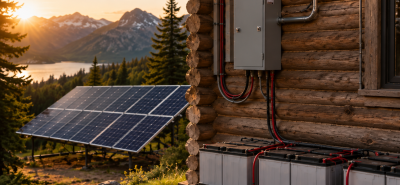
Solar panels feed a charge controller, which conditions the panel output before it reaches the battery. The battery stores that energy as DC, and an inverter converts it into AC for the loads. In systems that also tie to the grid or run battery backup, a single hybrid inverter can handle the solar, battery, and grid management together.
RV and Mobile
These builds usually carry both devices. A converter handles shore power charging, turning 120V AC into the 12V DC that keeps the batteries topped off. An inverter runs the reverse path, powering onboard AC appliances from the battery bank when shore power isn’t available. That combination is why RV and van builds often spec an inverter/charger to cover both jobs in one unit.
Commercial Vehicles and Fleet
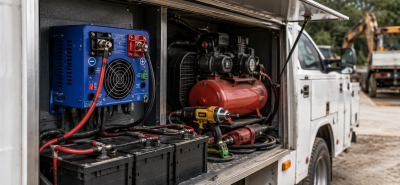
DC-DC converters feed auxiliary electrical systems rated at different voltages than the main battery, so a 24V truck can still run 12V equipment. Inverters power tools, laptops, and gear from the vehicle’s DC system during field work. For work truck and fleet applications, matching the inverter’s continuous and surge rating to the actual tool load is what keeps the system from tripping under startup draw.
Electric Vehicle and Industrial
EV power electronics rely on inverters to drive AC motors and on DC-DC converters to supply lower-voltage systems from the main pack. Industrial settings use the same split to match each load to its voltage and current requirements. The scale is larger, but the roles don’t change: inverters handle the form of the power, converters handle its level.
Matching each device to the application, rather than treating them as generic parts, is what keeps a build from being under-specified or over-specified.
How Inverters and Converters Work Together
Inverters and converters rarely work alone. In most builds, they run as a system, each handling its part of the power path depending on which source is live.
Picture a system with solar panels, a battery bank, and shore power charging. The charge controller (a converter) conditions the solar input, the battery stores DC, the inverter produces AC for the loads, and a charger (also a converter) tops the battery from shore power when it’s available. Each function switches on with its source.
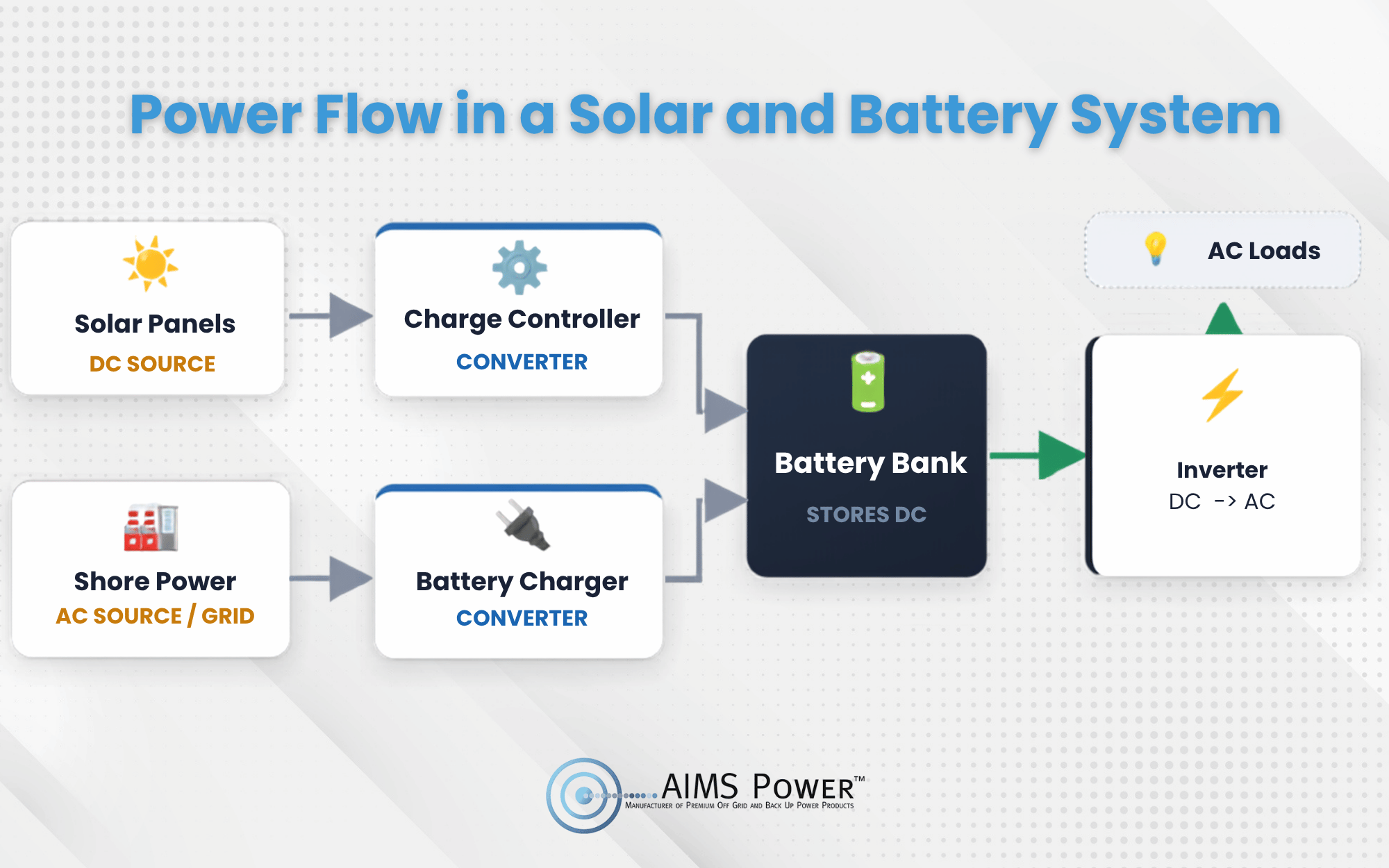
Some builds fold several of those jobs into a single device. An inverter/charger inverts DC to AC and, on the reverse path, charges the battery from shore power or the grid. A hybrid inverter adds solar and grid management to that same box. Where space, cost, and part count matter, one integrated unit can stand in for two or three separate ones.
For purchasing and engineering teams, the spec checklist stays consistent:
- System voltage (12V, 24V, or 48V)
- Continuous and surge load
- Required output waveform (pure sine or modified sine)
- Thermal and environmental conditions of the installation
- Serviceability and supplier support at volume
Choosing the Right Device for Your Build
A converter changes the level of power, stepping DC voltage up or down or turning AC into DC for charging. An inverter changes DC into AC to run standard equipment. Both do distinct work, and most real systems use them together. Getting that call right up front is what keeps a wrong spec from turning into a field failure later.
AIMS Power manufactures both sides of that equation: pure sine wave inverters, DC-DC step-down converters, inverter/chargers, and hybrid inverters, backed by U.S.-based technical support. For OEMs, installers, dealers, and fleet teams spec’ing power into a product or operation, that means one source for the components and the application help to match them to the load. If you’re sourcing at volume or building a power system into what you sell, contact AIMS Power for spec support or to talk through an OEM or reseller partnership.