High Wattage Inverters for Demanding Installations
The Short Answer: A high-power inverter converts large amounts of DC battery power into stable AC power to operate heavy loads like commercial equipment, large compressors, and uninterruptible power supply systems. Deploying a power inverter device successfully requires matching the unit’s peak power and continuous power output with an appropriately sized battery bank and correct input voltage. Doing so guarantees high efficiency and stable energy for demanding off-grid, mobile, and commercial applications.
Demanding installations rarely fail because someone bought a small inverter. They fail because someone bought a big inverter that was still incompatible. A work truck running a rooftop HVAC unit, an off-grid cabin with a well pump, and an OEM building a mobile command vehicle all need a high-power inverter, but the specific power requirements change with each load profile. This guide walks through what “high power” actually means and how to spec continuous and peak power, what to plan for around the inverter itself, and where each type of build tends to land on the AIMS Power lineup.
What Makes an Inverter “High Power”
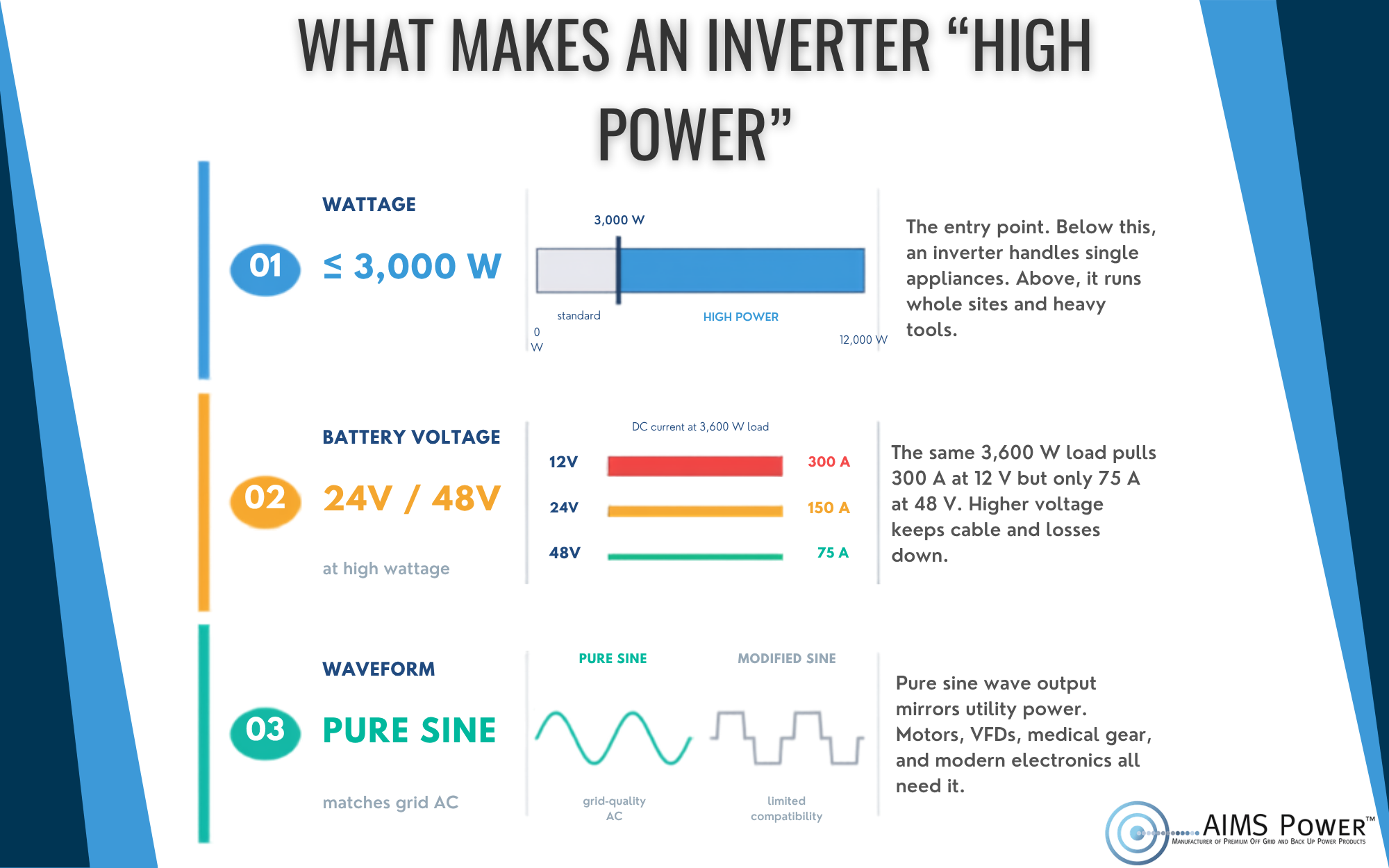
In power electronics and system design, an inverter rated at 3000 watts of continuous output power or higher falls into the high power category. While lower-wattage units serve intermittent personal electronics or single appliance loads, high-capacity units operate as primary power stations. They provide the necessary maximum power to run everything from residential refrigerators to heavy power tools on a remote job site.
A high-power inverter must manage massive amounts of current on the DC power side of the system. For example, delivering 3600 watts of AC power from a 12-volt battery bank requires pulling more than 300 amps of continuous DC current. Managing that level of electrical flow generates heat and places immense demand on internal components. Quality high-capacity units use advanced thermal management systems to maintain stability under continuous full-load conditions.
Continuous Output vs. Peak Power Capacity
Every high-load electrical system involves two distinct operational metrics:
- Continuous power: The maximum wattage the unit can deliver indefinitely without overheating or triggering safety shutdowns. For reliable long-term operation, your equipment’s peak power demand should ideally fall within the inverter’s continuous power rating to protect the unit from unnecessary strain.
- Peak Power: the short-duration power output the unit can supply, often for a few milliseconds to absorb the initial inrush current required to start electric motors and compressors. An inverter’s peak power rating is strictly designed for brief surge conditions and should never be relied upon as a sustained operating level.
Battery Voltage: 12V, 24V & 48V
Once you get above about 3,000 watts, 12V systems start to strain. The DC side has to move so many amps that cable size, fuse ratings, and voltage drop become the limiting factors. 24V cuts the current roughly in half at the same power output, and 48V cuts it again. Most high-wattage builds run on 48V pure sine wave inverters for this reason. Higher battery voltage means smaller cable, lower losses, and higher power density in the finished system.
Where High-Power Inverters Get Used
The applications look different, but the underlying spec problem is the same. Match a heavy load to a battery power source through an inverter that will not clip, overheat, or shut down mid-shift.
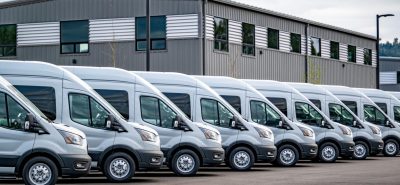
Work trucks and mobile shops
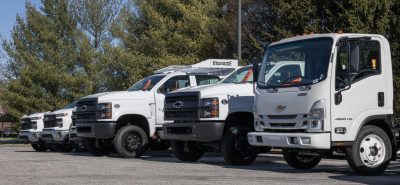
Utility, service, and mechanic trucks run air compressors, welders, tire machines, and power tools directly from the inverter. A 5,000W or higher unit with a strong surge lets the crew work all day without idling the engine.
RV, coach, and expedition builds
High-end coaches and expedition vehicles run rooftop air conditioning, induction cooking, and residential appliances. A 3,000W to 6,000W pure sine wave inverter charger, paired with a lithium battery bank and solar panel array, replaces shore power for days at a time.
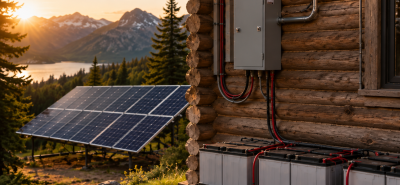
Off-grid cabins, remote sites, and small solar plants
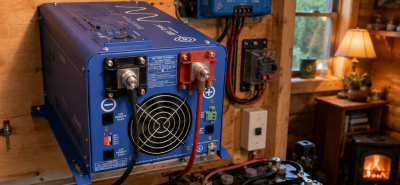
A stand-alone home or a small solar plant needs an inverter that can carry the full daytime load and hold overnight loads on battery. 48V pure sine systems in the 6kW to 12kW range are common, often with two inverters stacked for split-phase 120/240V.
Facility backup and uninterruptible power supply builds
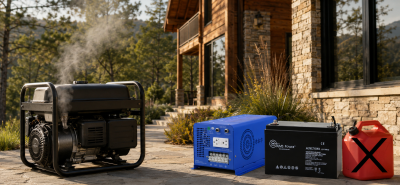
A high-power inverter paired with a battery bank acts as an uninterruptible power supply for critical circuits, holding servers, refrigeration, and process control through short outages without the noise or emissions of a fuel generator.
OEM and industrial integration
OEMs and upfitters integrate high-wattage inverters into work vehicles, mobile medical units, broadcast trucks, and portable equipment. The inverter design has to fit the chassis, tolerate vibration, and hold up in the temperature range of the enclosure.
Waveform Purity: Pure Sine Wave vs. Modified Sine Wave
The quality of the AC output waveform dictates how well your equipment functions when operating at high power levels. Inverters generally produce either a pure sine wave or a modified sine wave. The selection directly affects equipment operation and longevity.
A pure sine wave inverter produces an electrical waveform that mirrors the quality of municipal grid utility power. Clean sine wave power is recommended for microprocessor-controlled equipment, variable-speed power tools, induction motors, and modern appliances with complex digital control boards. Running sophisticated machinery on a pure sine inverter prevents motor overheating, reduces audible humming, and ensures that sensitive electronics perform exactly as the manufacturer intended.
In contrast, a modified sine wave inverter outputs power in a stepped, block-like waveform with a brief zero-voltage pause before changing polarity. While a modified sine unit can be cost-effective for basic resistive heating elements or simple incandescent lighting, it introduces severe electrical noise. When connected to high-draw inductive motors or complex electronics, this stepped waveform leads to inefficient energy transfer, excess heat generation, and potential equipment failure.
Sizing a High Power Inverter for the Load
Spec work starts with an audit of the load and works out from there. The table below shows the decisions that shape the final choice.
Spec | What to consider |
Continuous wattage | Sum the running wattage of everything that runs at once. Add 20% headroom. |
Peak power/surge | Brief startup surges only. Size the equipment so peak demand falls within continuous rating for reliability. |
Battery voltage | 12V under 3kW, 24V for mid-power, 48V for 5kW and up. Higher voltage keeps DC current and cable size manageable. |
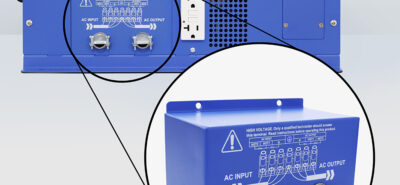
Output voltage | 120V for standard AC outlets, 120/240V split-phase for well pumps, dryers, or larger HVAC. |
Waveform | Pure sine for sensitive electronics, motors, and mixed loads. Modified sine only for simple resistive loads. |
Charger amps | On an inverter charger, size the AC battery charger for how fast you need to recharge from shore or generator. |
Certification | UL 458 for mobile installations, UL 1741 for stationary builds. |
Mounting | Match the enclosure to the environment. Rack-mount units suit data and telecom builds. |
Design Considerations for a Demanding Installation
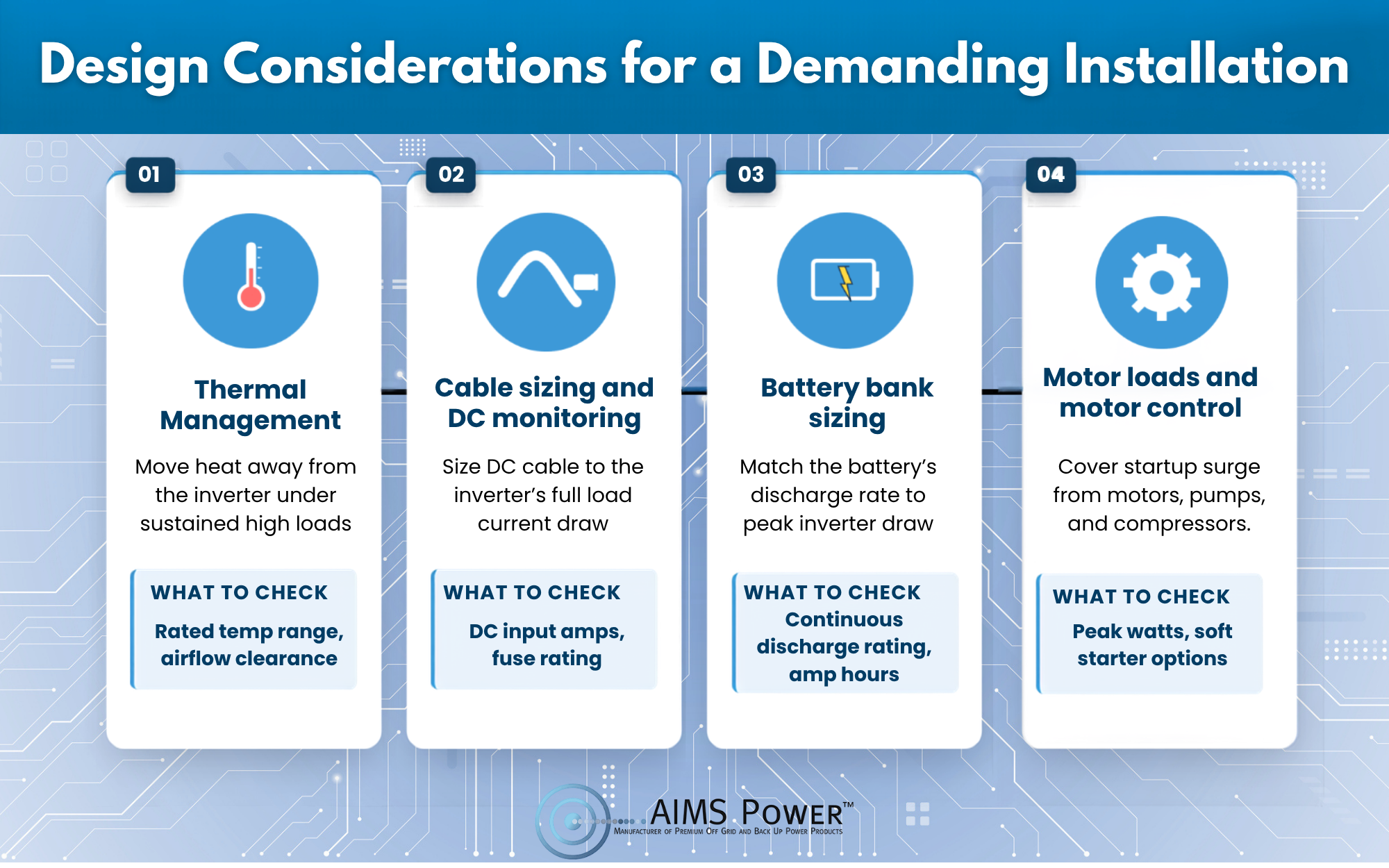
Picking an inverter is half the job. The rest is planning what works with it so the system holds up.
Thermal Management
High wattage means high heat, especially at maximum power. Give the inverter clearance for airflow, mount it in a space that stays within its rated temperature range, and keep it away from batteries that vent heat of their own. Silicon carbide power stages, used in some higher-end inverter designs, run cooler and hold high efficiency across a wider load band, which helps in enclosed installations.
Cable Sizing and DC Wiring
DC cable size is set by the current the inverter can pull at full load, not by the AC side. A 6,000W 48V inverter can pull 150A or more on the DC side, and a short, correctly sized cable with a properly rated fuse keeps voltage drop and heat under control. AIMS publishes DC input current per model to make this straightforward.
Battery Bank Sizing
The battery bank has to support the inverter’s maximum power draw. Lithium (LiFePO4) handles high discharge rates well and pairs cleanly with a high-power inverter charger. The bank capacity in amp hours sets runtime, and the discharge rating sets whether the bank can feed the inverter at peak without sagging.
Motor Loads and Motor Control
Motor loads dominate the surge calculation. Air conditioners, pumps, and compressors all need the peak power rating to cover startup. Soft starters can reduce inrush and let a smaller inverter carry a larger AC unit, which matters in RV and marine builds where space is tight.
Build Your High-Power System With AIMS Power
AIMS Power is a U.S. based manufacturer with more than 30 years of experience building power conversion equipment, backed by in-house technical support. AIMS builds pure sine wave inverters and inverter chargers from 3,000W up through 12kW and beyond, along with the lithium battery banks, solar charge controllers, and cable kits that complete a full high power system. For fleets, OEMs, and solar installers, that means one supplier for the inverter, the battery power source, and the accessories that tie them together.
If you are specing a high power inverter for a demanding installation, contact AIMS Power to size the right unit or to talk through OEM and volume options. To see the full lineup, browse the AIMS Power inverter collection and start matching output, voltage, and waveform to the load.